
RBR + TVBR INFOCUS
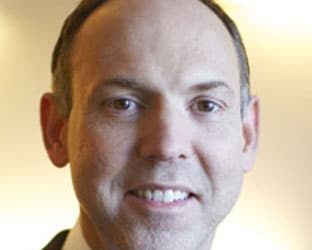
With newly appointed CFO/EVP Rich Schmaeling kicking off Entercom‘s first quarter 2017 earnings conference call with Wall Street analysts before quickly yielding to company President/CEO David Field, this Philadelphia-based pure-play radio broadcast company delivered a key message to the media world: It’s merger with CBS Radio creates a big No. 2 for the radio business, and gives Entercom the power to become a much-needed industry advocate with new clients and light advertisers.
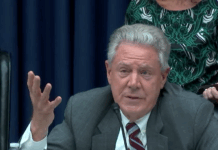
RBR + TVBR OBSERVATION (Full commentary below, for Members Only): Introducing the radio industry’s No. 1 cheerleader—David Field. In an impassioned statement delivered during his company’s Q1 conference call with financial analysts, Entercom’s President/CEO declared, “Radio has suffered from a woefully insufficient industry advocacy effort.” Yes, it has. Is Mr. Field the leader the woefully moribund radio industry finally needs to get the gear shift out of the neutral position it’s been stuck in for more than a decade?
Field began his company’s Q1 call by noting that, with revenue down 1% on a same-station basis — minus political dollars — “on an apples-to-apples basis, we were essentially flat.”
On the cost side, he pointed fingers at Schmaeling — sort of.
“We experienced a highly unusual degree of large one-time only expenses during the quarter that drove our costs considerably higher, most notably our CFO transition,” Field said.
Then, there’s the surrender of the KDND-FM in Sacramento station license, which cost roughly $13 million, and costs tied to its Reverse Morris Trust-fueled tax-free merger with CBS Radio.
“We will continue to incur some additional expenses related to our transformational growth as we work through the approval process and ramp up the organization in preparation for the merger,” Field said.
The important point for investors, Field added, is for them to focus on how the combined company will look post-closing. “We have already articulated our belief that the transaction will generate synergies of at least $25 million conservatively,” he said. “Our work over the past couple of months has only increased our comp and our ability to achieve this level of synergies or higher, while still being able to enhance the competitiveness of the organization.”
Until then, Entercom must face the same challenges as other radio pure-plays.
This means riding the waves of a volatile advertising market. For Entercom, January was its strongest month for ad revenue in Q1; February was its weakest.
Local outperformed national with solid growth in digital revenues. “We gained revenue share in a significant majority of our markets during the quarter,” Field said. “Our best performing categories were home furnishings and improvements, telecom and TV cable. And, our best performing markets were Atlanta, Miami, and Milwaukee.”
The rough waters will persist into Q2, Field noted.
“Business conditions have been a bit choppy, although we have seen some modest increase in improvement,” he said. “We are currently pacing down 2% on a same-station basis in the second quarter. April was a particularly weak month. May was significantly better and we are currently pacing up low single digits in June.”
SPORTS: THE ‘GAME-CHANGING’ GOAL
If there’s one thing out of the CBS Radio merger that Entercom sees as the biggest catalyst, it is sports.
“This platform positions Entercom to attract significant interest from major national advertisers who have either been non-users or very light users of radio,” Field commented.
It’s one reason why former San Diego Padres and Miami Dolphins CEO Mike Dee has come on board as the first president of what will be known as Entercom Sports.
“He is a terrific leader with a particular talent for driving revenue,” Field said as he called Dee a high-impact addition to “best-in-class” management team, consisting of leaders from Entercom and CBS Radio and, like Dee, those from outside the industry.
Where do things stand on the CBS Radio merger?
Field said Entercom is in “active discussions” with other radio groups on the required divestitures. “We have received a significant number of strong offers in the form of cash and trades for all of the proposed [spinouts],” Field said. “We feel excellent about where we stand in the process.”
RBR + TVBR has learned that in Los Angeles, Entercom’s Classic Rock KSWD-FM 100.3 “The Sound” has emerged as the likely property the company will divest, rather than KCBS-FM 93.1. However, elements of “The Sound” — if not all of its intellectual property — could shift to KCBS or another CBS Radio property in Los Angeles.
Closing his prepared remarks, Field put on his best cheerleading uniform, and gave it his best shot in reiterating what radio’s other leaders have repeatedly said over the better part of a decade: Radio is an undervalued medium suffering from “inaccurate perceptions that fail to grasp its vibrancy and effectiveness.”
He said, “Radio has suffered from a woefully insufficient industry advocacy effort. As a result, radio’s punch is well beneath its weight class. With this merger, Entercom will have the scale and resources to compete more effectively with other competitive ad based media.”
Field believes the new Entercom will emerge “as the leading creator of live, original, local audio content able to deliver advertisers the power of radio’s local listener connections at a national scale.”
Perhaps most poignantly, Field strongly believes that “with a second major voice advocating the power of radio, and presenting customers with a compelling advertising alternative, we will help to enhance radio’s perceptions and cause advertisers to give radio greater consideration for future advertising and marketing spending.”
This is particularly true, he said, “as other media continue to wrestle with significant disruption and other challenges, making radio a more viable and competitive choice for agencies and customers is a win for everyone.”
The comments put Field in a role that, for many years, was held by beloved Emmis Communications head Jeff Smulyan. It also solidifies the rise of Field to a position that puts him alongside iHeartMedia President/COO and CFO Rich Bressler as a key advocate and industry voice, as Cumulus Media continues to find a road to recovery due to its high leverage and extreme debt.
Field concluded the conference call by answering prepared questions from key financial analysts. Among them was Marci Ryvicker, Senior Analyst and Wells Fargo Securities. She noted that Entercom stated on its Q4 and FY2016 earnings call that pacings were down 2%, but Q1 finished down just 1%. What drove the acceleration in the second half of Q1?
Field said, “Things have gotten incrementally a little bit better over the last couple of months,” noting that pacings for Q2 are now down 2%, and had been pacing down 4%. “I think there was incremental improvement due to our own efforts and possibly some sequential improvement in business conditions.”
Avi Steiner at JPMorgan Chase & Co. inquired about how automotive did for Entercom.
“Auto is off a little bit,” Field said; a Seeking Alpha transcript of the call incorrectly states that it was “up a little bit.”
Auto is the largest category for Entercom, but Field reiterated that the radio business benefits from having a highly diverse advertiser base. Auto advertising comprises a “mid-teens” percentage of spot dollars for this category, he said.
Steiner also asked what Field believes is the right leverage for a radio company.
His reply? Entercom is targeting between 3.5x and 4x and is presently at 4x. He expects this to be the same at the end of 2017.
Lastly, when asked by lagging performance at CBS Radio, Field played up its “extraordinary lineup of some of the most iconic brands, strongest personalities, and very strong sales organization.”
He commented, “We need to distinguish between speed bumps in the short run and what matters in the longer term.”
RBR + TVBR OBSERVATION: Introducing the radio industry’s No. 1 cheerleader—David Field. In an impassioned statement delivered during his company’s Q1 conference call with financial analysts, Entercom’s President/CEO declared, “Radio has suffered from a woefully insufficient industry advocacy effort.” Yes, it has. Is Mr. Field the leader the woefully moribund radio industry finally needs to get the gear shift out of the neutral position it’s been stuck in for more than a decade? We certainly hope so. The radio industry has its share of beloved leaders. The radio industry has its share of pioneers. But, Field is absolutely correct in stating that there has been no true collective fight for ad dollars.
From the sale of Radio and Records in 2006 to Nielsen until August 2016, our Editor-in-Chief no longer covered the radio industry. Why? What for? Marci Ryvicker at Wells Fargo Securities barely covers it, let alone any analyst. The Chief Marketing Officers he was having conversations with while a multicultural analyst for a major global brand marketing research firm barely discussed radio. For all intents and purposes, radio was an uncool medium that lacked the sizzle of digital and social media. Of course, as we all know, these perceptions are incorrect — ten years on. Why has the Radio Advertising Bureau, under former R&R Publisher Erica Farber, not galvanized the industry to fight in unison against digital and social media? What explanation is there for the absence of advertising in the media used by digitally savvy multicultural millennials to remind them that radio matters, paid for out of a pool or perhaps RAB member dollars? It’s pathetic, actually. Radio’s future, just as it was in 2002, lies in digital. Today, radio’s story requires education, enthusiasm, and leadership. In a world where “fake news” is still a thing and nervous brand managers are challenging Google and Facebook to clean up their metrics and ad placement, let’s join together and Make Radio Great Again. Otherwise, we will continue to get ignored from Wall Street, Madison Avenue and all of those potential consumers on Main Street that continue to believe your content is irrelevant. While the other radio station owners in town may be your competitors, they’re really your allies in a fight against TV, direct mail, and digital media giants like Google and Facebook. We look forward and support a unified assault on these other media.
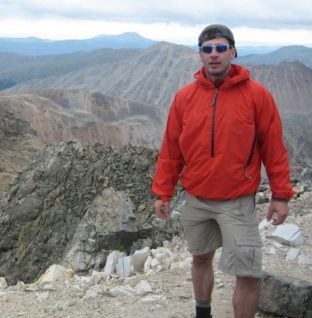
It may also spark the other unspoken thing this industry needs … a battle to Make Radio Relevant Again. As Mr. Field enjoys mountain climbing, based on his Twitter photo featured here, let’s all get on our hiking boots and get to that peak that’s been needlessly elusive for all of these years.