The Acting Chief of the FCC’s Media Bureau has dismissed a Petition for Special Relief filed by “a number of former FCC officials” and a notable hopeful who requested the Commission “repeal its news distortion policy in full.”
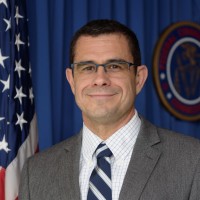
The reason, spelled out by Alex Sanjenis, is simple: cable rules allow petitions for special relief, and don’t apply in this context.

The stab at getting the Carr Commission to consider the petition comes courtesy of the New Orleans-based Protect Democracy Project, Tech Freedom head Berin Szóka, progressive-aligned D.C. attorney Andrew Jay Schwartzman; and one Gigi Sohn — President Biden’s failed two-time nominee to serve as a Commissioner.
They were later joined by the Radio Television Digital News Association, as all assert that the FCC “may not investigate or penalize broadcasters for ‘distorting,’ ‘slanting,’ or ‘staging’ the news, unless the broadcast at issue independently meets the high standard for broadcasting a dangerous hoax under 47 C.F.R. § 73.1217.”
Sanjenis readily offered a response to that claim, which he says is false.
“As [the] former FCC officials and Petitioners may know, FCC rules recognize and permit the filing of various types of petitions and other pleadings,” Sanjenis said. “FCC rules also specify different requirements, deadlines, and comment cycles for pleadings based on the relevant, governing rules. Petitioners do not identify or invoke any rule that they state governs or even authorizes the pleading they have filed. We have identified a provision of the FCC’s rules—namely, Section 76.7 of the Commission’s cable rules that provide for petitions for ‘special relief.’”
But, he explained, ‘”Section 76.7 petitions for special relief do not apply in this context. Those types of petitions for special relief apply to ‘waive any provision of . . . part 76, impose additional or different requirements, issue a ruling on a complaint or disputed question, issue a show cause order, revoke the certification of the local franchising authority, or initiate a forfeiture proceeding.’”
Thus, Sanjenis concluded, “That is not the type of relief that Petitioners appear to be seeking in their Petition for Special Relief. Petitioners have failed to present their request in a manner that is cognizable under our rules.”
The rejection of the petition for special relief squelches an effort that began in mid-November 2025, when a bipartisan coalition of seven former FCC chairs and commissioners, including five Republicans, and senior staff called on the Carr Commission to rescind its news distortion policy. Their reason? It is an outdated rule that has increasingly been weaponized to chill press freedom and silence critical journalism.
Among the coalition of former FCC figures are Andrew C. Barrett, Rachelle B. Chong, Ervin S. Duggan, Mark S. Fowler, Dennis R. Patrick, Alfred C. Sikes, Thomas E. Wheeler, Christopher J. Wright, Kathryn C. Brown, Jerald N. Fritz and Peter Pitsch.