Did Google Steal A Sheridan Patent?

0

RBR+TVBR INFOCUS


Less than one month ago, the Washington, D.C.-based Partnership for Innovation and Empowerment (PIE) suggested that Guggenheim Capital Partners gagged American Urban Radio Networks (AURN) and Black News to death.

Now, this PIE is taking a sharp cake cutter and flinging at one of the largest digital communication and advertising giants on the planet.

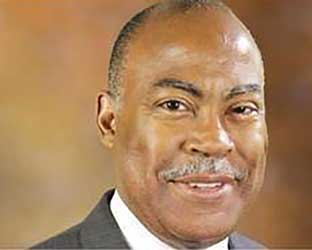
In its view, Google “plagiarized and tried to steal a patent” from Sheridan COO Ron Davenport Jr.

In a communique distributed through PIE this week, Davenport shared a letter about his “Google Experience.”

In it, he makes salacious claims against the company.

“I approached Google to discuss a way for YouTube to compete for TV ad dollars,” he claims. “My proposal was for YouTube to allow YouTube content to be distributed via radio stations and radio station websites.”

It’s an intriguing idea: Instead of starting with an audio file, a radio station starts with an audio/visual file. In turn, the station broadcasts the audio while simultaneously streaming the audio/visual.  “Basically, my idea turns radio station websites into mini-MTV channels/TV stations using content from a central repository such as YouTube,” Davenport wrote.

He offered several examples of how this presented advantages over digital distribution, including bandwidth costs, copyright fees, and ad measurement that mirrored that of TV.

On December 18, 2008, Davenport spoke by phone “with [two] very senior Google people (David Drummond and Megan Smith) and 2 additional Google team members (Jack Ancone and Jag Duggal). He signed an NDA dated February 25, 2009, and visited the Google campus on March 12, 2009.

Google assigned Bob Meese to work with Davenport on developing his idea. After “several meetings and many discussions,” Davenport was told that his idea didn’t fit within a Google “bucket.”

With that, Davenport filed a provisional patent application on March 9, 2009, and it was published on September 9, 2010.

Exactly one year later, a company called Vadio filed a provisional patent application very similar in scope to my idea. Says Davenport, “If Vadio had filed one day later, my patent application would have been prior due to the similarity of the proposals and Vadio would not have been allowed to file its patent application.”

What was Vadio? Four Portland, Ore.-based gentlemen in their 20s who Davenport blasts as knowing nothing about the media or advertising business launched the company.

Upon closer investigation, one of the senior advisors to Vadio was Dean Gilbert, previously the head of global content for YouTube.

Several of the other angel investors for Vadio included:

  •  Marc Geiger (William Morris Endeavor)
  •  Jay Boberg (MCA/Universal)
  •  Bruce Eskowitz (Live Nation)
  •  Michael Goldfine (RockStream Studios)
  •  Portland-based advertising agency Weiden+Kennedy.

Vadio obtained rights to use YouTube and Vevo videos as part of its product, Davenport asserts. Further, he claims Vadio also negotiated deals with Warner Music Group and Shazam.

Vadio raised $2 million in 2014 from such individuals as Ed Wilson (NBC Enterprises), Robin Richards (Vivendi Universal), and Irwin Federman (U.S. Venture Partners), and from Manatt Digital Media.

Vadio raised an additional $7.5 million in 2015, and brought on Rio Caraeff (from Vevo) as an advisor, and Yair Landau (from Sony) as Chairman/COO.

“I had steadily been pursuing my patent since 2009,” Davenport says. “The Patent Office rejected my application on February 24, 2013, but under the rules I was able to ask for reconsideration.”

Davenport’s lawyers set up a meeting for him with the Patent Office on April 11, 2013 to discuss the patent examiner’s concerns. In preparation for the meeting, Davenport decided to take a look at Vadio’s patent application, to see if there was anything that might help pursue his patent.

“I was shocked to find a paragraph lifted verbatim from my application,” he says. “I had defined a ‘wired network,’ and even people in the advertising and media space don’t know what a wired network is — let alone four guys not in the media business.”

Davenport ultimately did receive a patent on October 15, 2013 — it is listed as patent no. 8,560,718. He then spoke with Vadio CEO Bryce Clemmer in November 2013 once by phone after the patent was issued, but Davenport says nothing came of this conversation.

It turns out that Vadio abandoned its initial patent application and filed a new application on December 18, 2013.

This is where things turn thorny: Davenport asserts that, to ensure that he did not learn of this new application and, therefore, be unable to comment on it, Clemmer filed the new application in his own name. After the comment period ended, Clemmer than transferred the new application to Vadio, Davenport claims.

Vadio proved to be unsuccessful; it began winding up its operations in February 2017.

For Davenport, a “what if” scenario led him to publicly share what he believes is probable theft.

“I cannot say definitively that Google attempted to steal my idea,” he admits. “I can say that Google was certainly in a position to steal and benefit from my idea. I do not recall telling anyone at Google that I had filed a provisional patent application. Nonetheless, I spoke and visited with Google in 2008 and 2009, and between 2009 and 2011 the former global head of content for YouTube became an advisor to DuroCast, which in 2012 would become Vadio.”

For Davenport, there are two conclusions for such conduct: “Stupidity or spite, based on hubris or superiority from having very deep pockets,” he says. “These very deep pockets, moreover, would also explain how Vadio was able to raise substantial sums of money from very high powered and well connected individuals on the basis of a flawed patent application.”

What’s next for Davenport? He wants PIE to work on his behalf, through its Minority Media Inclusion Initiative, to get Congress to investigate the matter.

Leroy Jones Jr., a PIE Advisory Committee member and Sheridan Broadcasting Corp. President, commented, “These monopolies, like the large and powerful companies of old, have fought regulation and oversight with big money and influence. I understand that game. That’s why I will be formally requesting the appropriate Congressional Committees to investigate and hold hearings on their actions, and we will also be exploring all possible options to hold them accountable for their actions.”