


Tribune Whiffs With Weak Q2 Results
Did Sinclair Broadcast Group go to Chicago Canine Rescue and adopt a dog? That's what some investors might start to ask, given the Q2 results Tribune Media just posted. Yes, the company's net loss was narrower. Yes, Tribune’s Diluted EPS failed to meet analysts' estimates.

Here’s Good News For NextRadio, But …
The NextRadio app as originally conceived effectively unlocks the FM tuner that's hidden in an Android-powered device, including most — if not all — Samsung models presently on the market. According to the latest smartphone OS data from Kantar Worldpanel ComTech, Samsung regained the top sales spot in the U.S. for the three-month period ending May 30. However, its share is down.

Flat Expectations: Townsquare Pleased With Status Quo
"We are pleased to report another solid quarter that was in line with our expectations.” That's how Townsquare Media Chairman/CEO Steven Price opened his discussion this morning on the event marketing and small-market radio broadcasting company's Q2 results. While net revenue was up 2.6%, consistent with the company's guidance, net income and Adjusted EBITDA were pretty much a pancake — flat, but tasty enough to satisfactorily accept.

Nexstar Surges In Q2, Fueled By Media General Properties
The addition of the Media General TV stations to Nexstar Media Group significantly impacted its bottom line in Q2: Nexstar enjoyed a 139% net revenue rise to a record $626.1 million.
Gray Television Shines With Stellar Q2
Poor comps? Not here. Gray Television enjoyed a Q2 2017 that was nothing short of spectacular, as revenue surged to $226.7 million from $196.6 million, and net income catapulted to $70.6 million (97 cents per diluted share) from $17.7 million (24 cents). Thank the Spectrum Auction for the strong quarter, and buckle up for a bumpy Q3.

CBS’s ‘Favorable Positioning Away From Advertising’
Following Monday's Closing Bell on Wall Street, CBS Corporation reported Q2 2017 results that surpassed expectations, coupled with profits that met the Street. Brian Wieser, a senior analyst at Pivotal Research Group who has emerged in recent months as a prolific pulse-taker of broadcast media's publicly traded companies, likes what he sees: CBS execs hint that the company is shifting its revenue mix away from advertising and toward other activities, and those moves are "particularly positive."

Down, Down, Down: Salem’s Q2 Results
Holy Moly: Upon first glance of Salem Media Group's second quarter earnings release, distributed just past 1pm Pacific by the Southern California-based faith-focused and conservative talk broadcast company, one word glaringly sticks out among all others: Decreased. It set the tone for a quarter in which net income plummeted on slightly less revenue.
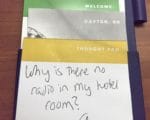
Here’s Another ‘F’ For Radio’s Report Card
With all of the excitement over radio's renewed place in the home thanks to Smart Speaker devices such as the Amazon Echo and Google Home, it still loses — badly — in the one place you're most likely going to sleep and shower that you don't live in: The hotel. Here's what RBR+TVBR's Editor-in-Chief has to say on the subject, and why you should rally around him now.

Here’s What The MMTC Says On Media Reg Modernization
The Multicultural Media, Telecom and Internet Council (MMTC) this week filed reply comments with the FCC to its "modernization of media regulation initiative." Co-authored by President/CEO Kim Keenan and President Emeritus and Senior Advisor David Honig, MMTC outlines seven priorities the Commission should take when proceeding with its plans.

A Flurry Of Anti-Sinclair/Tribune Media Filings
The FCC is sticking with its timetable for public comments, reply comments, and responses to reply comments regarding the blockbuster Sinclair-Tribune Media merger. More time was requested by DISH Network, the American Cable Association (ACA), and Public Knowledge, who are waging a collective fight to stop the merger. A Monday press call will formally announce their FCC filings in opposition to the proposed deal, and local news is a big reason fueling their battle.

Is ‘Fair Play’ On Path To Fade Out?
Legislation introduced March 30 by Rep. Jerrold Nadler (D-N.Y.) that would require AM and FM radio stations that play copyrighted sound recordings to pay royalties for the non-digital audio transmissions of the recordings has picked up another supporter in Congress. But, is the bill inching toward the ether? Is bipartisan opposition on both sides of Capitol Hill — backed by the NAB — too great to overcome? That's what it looks like.

Confirmed! Rosenworcel Returns, Carr Drives In To FCC
The U.S. Senate on Thursday officially brought the FCC back to four Commissioners while ensuring Ajit Pai remains Chairman. Pai congratulated Rosenworcel on her reappointment as a Democratic Commissioner, and applauded Carr's arrival at the FCC.

Univision Leader ‘Pleased’ As Net Income Jumps In Q2
On a day when TV industry stocks were getting pounded on Wall Street, Univision Communications President/CEO Randy Falco sounded a bit too cheerful. "I am very pleased with our quarterly results," he said in announcing that the company focused on Hispanic consumers and multicultural millennials saw its ad revenue shrink by 17% in Q2, and its total revenue slump by 4.4%. Why was Falco in such a good mood? Univision saw a healthy net income jump.

Q2 Revenue Dips, But Net Loss Narrows At iHeart
It was a mixed three-month period for the company with the highest count of AM and FM properties across the U.S., as consolidated revenue declined. That's primarily due to a $36.1 million impact tied to the sale of outdoor businesses. Minus that, revenue was up. Meanwhile, operating income soared—helping iHeart narrow its massive net loss.

A Net Income Dip For Entravision
Entravision Communications, the owner of broadcast TV and radio stations largely targeting Hispanic consumers, released its Q2 2017 results right after the Closing Bell on Wall Street Wednesday. How did it do? Net revenue was up, but net income was down.