

RBR+TVBR INFOCUS
On July 25, influential Louisiana Republican House Member Steve Scalise introduced a bill that was referred to the Subcommittee on Courts, Intellectual Property and the Internet. California Democrat Anna Eshoo signed on as a co-sponsor of this legislation, which would largely require “good faith requirements” when negotiating a new retransmission consent agreement.
The bill was dead on arrival, with no co-sponsors or mention of the “Modern Television Act of 2019” until today. That’s because Jim Schwartzel, President of a small TV broadcasting company in Southwest Florida, says AT&T is support of the legislation.
If so, he has one question for the owner of DirecTV: Is AT&T being truthful?
Schwartzel has every reason to ask, as DirecTV has lacked a retrans consent agreement with his TV station since late January.
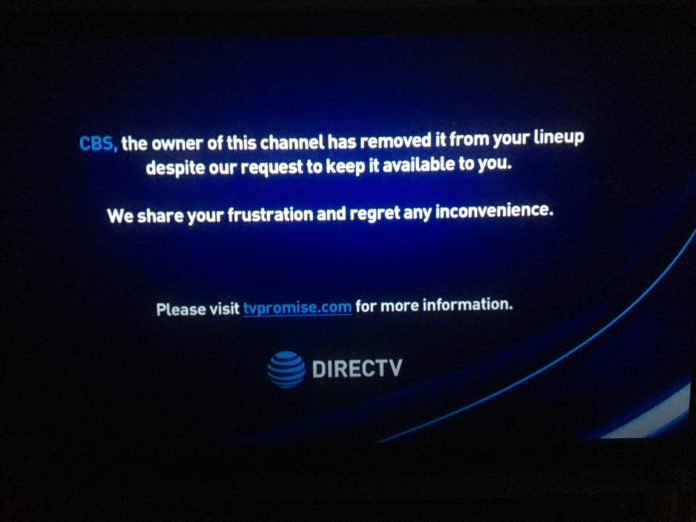
As RBR+TVBR exclusively reported in July, WXCW-46, the affiliate for The CW Network serving the Fort Myers-Naples, Fla., DMA, has been absent from DirecTV lineups in the DMA due to a retrans impasse.
As a result, DirecTV subscribers in Lee and Collier Counties, in addition to much of Charlotte County, have not had access to The CW for 11 months.
WXCW has had its impasses with DirecTV in past years. However, the length of absence for WXCW, locally owned by Sun Broadcasting and operated via a Shared Services Agreement with Fort Myers Broadcasting Co., is rather unprecedented.
That said, Fort Myers-owned CBS affiliate WINK-11 has been off of DISH Network since mid-January 2019. The lack of a new retrans consent deal is the reason.
In July, an AT&T spokesperson told RBR+TVBR that DirecTV and Sun “mutually agreed to end talks at the end of January and part amicably.”
Leading the negotiations for WXCW is Jim Schwartzel. His father, Joe Schwartzel, is GM for WINK.
Until now, the younger Schwartzel has refrained from speaking to the media about WXCW’s lengthy absence from DirecTV. But, with the sudden end of a long impasse between Northwest Broadcasting coming in early October and the August 30 inking of a new pact between DirecTV and Nexstar Media Group, Jim Schwartzel was moved to act.
“The primary reason I have waited so long before sending this letter is because AT&T threatened our negotiations were protected,” he said in a note sent to the media on Oct. 18.
In the letter, Schwartzel assails AT&T for negotiating retransmission deals with larger broadcasters while “penalizing single market and minority operators.”
As he asserts, during the negotiations between AT&T and WXCW in late 2018 and early 2019, AT&T only made one unilateral proposal. “From the inception of our negotiations AT&T never offered an explanation for denying multiple proposals from WXCW, which include similar terms with other MVPD’s retransmission agreements,” Schwartzel says. “DirecTV even refused to drop language from 2012 [that] restricted WXCW’s purchase of [an] in market LPTV station.”
Schwartzel explains that this legacy “after acquired”-type language was included in other retransmission agreements it had, but says no other MVPD had an issue dropping the language.
“The ‘after acquired’ provision had absolutely no bearing on our negotiations for carriage of WXCW on AT&T’s DirecTV, and holding this simple provision hostage is directly illustrative of AT&T’s anti-competitive behavior,” Schwartzel says.
In addition to WXCW, Sun is the licensee of LPTV WUVF-LD 2, with Univision programming on DT1 and UniMás programming on DT2; and WANA-LD 16, airing Azteca América programming.
Furthermore, LBI Media-owned Spanish-language broadcast TV network Estrella TV is housed on WXCW’s DT2 channel.
CAPITOL HILL CONTRADICTION?
 AT&T has not been in communication with Sun or its legal counsel since July 2.
But, AT&T has been vocal in Washington in regard to the “Modern Television Act of 2019,” H.R. 3994.
As RBR+TVBR reported on July 26, bipartisan legislation was introduced in the House of Representatives that would repeal “outdated regulations of the 1992 Cable Act.”
In the minds of co-sponsors Eshoo and Scalise, the legislation would put an end to retransmission consent and compulsory copyright licenses, and would “increase competition in the TV marketplace.” Further, it would “better address perennial broadcast TV blackouts.”
The NAB seems to have significant influence on Capitol Hill. The biggest lobbying voice in Washington for broadcast media made it clear it does not want any such action to occur. And, as of Oct. 21, no members of the House have joined Eshoo and Scalise as co-sponsors.
The Modern Television Act of 2019 would accomplish the following:
- Extend the “Good Faith” negotiation requirements (that otherwise expire on December 31) and applies these requirements to small- and medium-sized cable operator buying groups. This will allow smaller competitors to band together in negotiations for programming and lower costs for consumers. (Effective 90 days after enactment.)
- Protects consumers from experiencing broadcast “blackouts” when MVPDs and broadcasters fail to extend an agreement by requiring MVPDs carry a broadcast signal while the parties continue negotiations for up to 60 days. Parties are retroactively paid for their content aired during this time. (Effective 90 days after enactment.)
- Repeals retransmission consent, compulsory copyright licenses, and several other outdated statutory provisions and regulations. This would allow free-market contract negotiations to happen under traditional copyright law. (Effective 42 months after enactment.)
- Establishes a mechanism by which the FCC may, but is not required to, compel parties to seek “baseball-style” binding arbitration through a neutral third-party arbitrator, following an extended impasse or a finding of bad faith. Consumers are protected from blackouts that otherwise would have occurred, and copyright holders are paid for their content during this process. (Effective 42 months after enactment.)
- Preempts federal, state, and local authority to regulate rates of cable services. (Effective 42 months after enactment.)
- Requires the Government Accountability Office to report specific metrics about the impact of this Act on consumer and the marketplace every two years. Based on the totality of these metrics the FCC must determine if this Act has had a net positive, net negative, or indeterminate impact on consumers and the marketplace. If the FCC finds a net negative impact, it must recommend specific policies for Congress to improve the marketplace.
- Ensures consumers have access to local programming by retaining the ability of a local television broadcast station to require carriage on cable and satellite providers in their local market. (Effective immediately, no change in law.)
“NAB respectfully opposes legislation introduced by Reps. Eshoo and Scalise that we believe would undermine America’s world leadership in free and local broadcasting,” EVP/Communications Dennis Wharton said in July.
“Key stakeholders” in support of the bill include the Taxpayer Protection Alliance, Public Knowledge, the National Taxpayers Union, and Gigi Sohn, a former Counselor to the FCC Chairman who held the post prior to Ajit Pai — Tom Wheeler. To little surprise, other supporters include the ATVA, and ACA Connects.
That said, inaction on the bill could make any discussion of its impact moot.
Nevertheless, Jim Schwartzel is calling out AT&T for its support of H.R. 3994.
In late September, AT&T EVP/Federal Relations Tim McKone wrote to NAB leader Gordon Smith in support of the Act. It served as a reiteration of comments made in late July by McKone.
“In order to protect our customers from these price increases and TV blackouts, AT&T supports Reps. Scalise’s and Eshoo’s legislation and we thank them for their leadership on this issue,” McKone said. “We are committed to working with Congress, broadcasters and others to modernize our video and television laws to benefit consumers.”
Schwartzel’s response? “The Modern Television act prevents blackouts and forces arbitration. Although AT&T publicly supports this act, AT&T has refused to communicate with WXCW’s last proposal on Sept. 24 to prevent further harm to consumers by restoring WXCW to DirecTV and resolve our impasse in arbitration …. that is if AT&T’s support of H.R. 3994 is truthful.”
OWNER HARM
Another complaint Schwartzel has regarding its lack of negotiating progress with AT&T-owned DirecTV is AT&T’s influence at The CW Network.
It’s a 50-50 joint venture between CBS and WarnerMedia, now owned by AT&T.
“The CW network demands network compensation from WXCW which are derived from retransmission fees,” Schwartzel says. “WXCW is one of the highest-rated CW affiliates and purchases many syndicated programs from Warner Bros. studios, now also owned by AT&T. AT&T is impairing their own network and syndicated programming by reducing the value of their network and barter commercials.”
In his communiqué with the media, Schwartzel reveals that AT&T’s incremental subscriber cost to include WXCW “is less than $0.25 a month.”
Prior to WXCW’s removal from AT&T’s DIRECTV, 2% of DirecTV’s total viewing in Fort Myers-Naples was to WXCW, Schwartzel claims.
” t $0.25 and 2% of their audience viewing, if all of their viewed programming offered the same value, AT&T’s total programming costs would be $12.50,” he says. “WXCW is AT&T’s best value. AT&T indicates publicly they want to ‘minimize public harm’ from blackouts but WXCW cannot get AT&T to respond to our blackout.”
At midnight on October 24, the impasse will enter its 11th month.
There’s every chance this battle could last a year, or perhaps longer.
Says Schwartzel, “AT&T’s programming directors appear to be at odds with their own lobbyists; or AT&T is not sincere about protecting consumers.”