

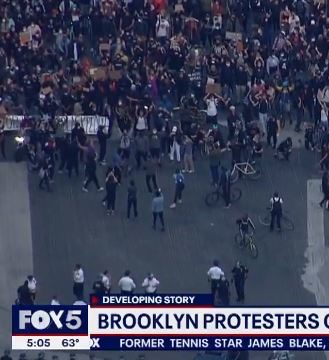
From a big-picture perspective, TV news is largely trusted. But, there’s a crack in that armour with respect to how some television news organizations are covering protests against racial injustice in the wake of George Floyd’s murder at the hands of Minneapolis Police Department officers.
New data from Horowitz Research suggests the negative aspects of the protests have dominated coverage — and that’s not sitting well with Gen Z and Millennials.
As protests continue across the globe — including in Ireland, where public safety concerns over the spread of COVID-19 cancelled a planned June 8 protest in Dublin — the power of the media in shaping public opinion has never been more apparent than it has been over the past few months.
For Horowitz, “news outlets need to speak truth to stay relevant and trusted by young, multicultural audiences.”
According to the firm’s latest research, “some networks and media outlets have faced backlash over coverage of the protests, with critics pointing to a ‘tendency to focus on the negative;’ and riots, looting, and violence, rather than empathy with the expression of rage over overt racism and a system that seems to deny that Black lives matter,” said Adriana Waterston, Horowitz’s SVP of Insights and Strategy. “For decades, TV news has been one of the primary ways that the American public has stayed informed. Trust, engagement, and context, not just viewership, are critical for brands and advertisers. That cultural connection is now the immediate challenge and responsibility for major TV and cable networks to stay relevant.”
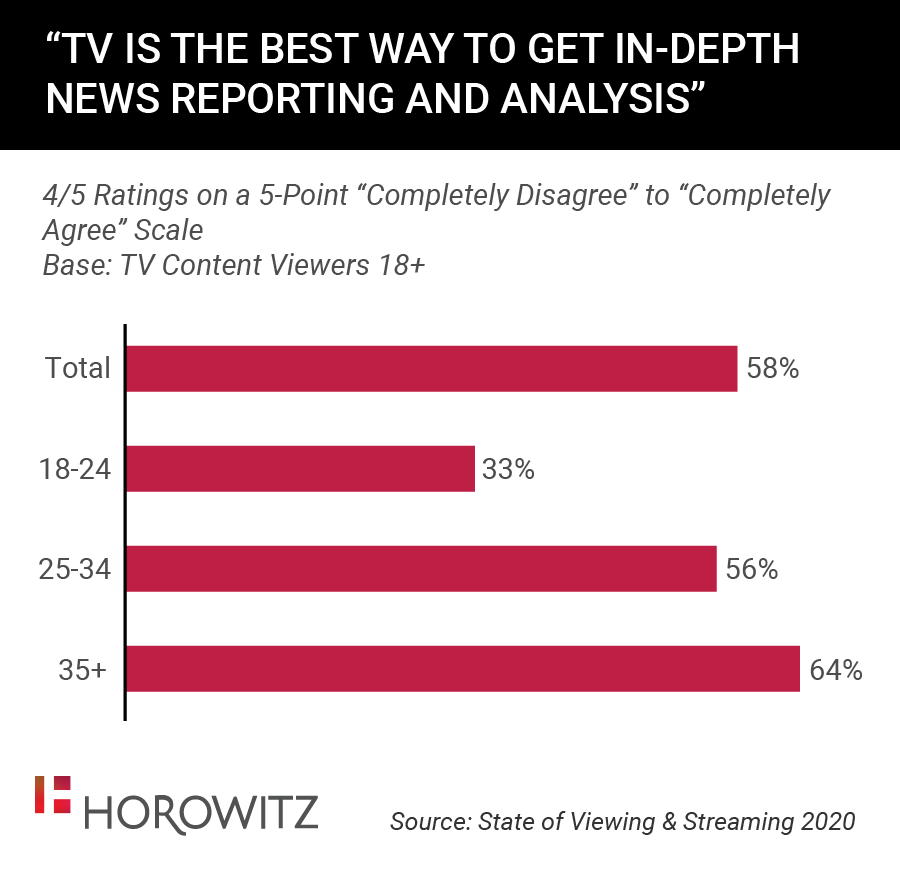
Overall, TV news is still largely trusted: In Horowitz’s State of Viewing & Streaming 2020 study, some 58% of TV content viewers agree that TV is the best way to get in-depth news and reporting.
There are substantial differences, however, by age.
Among 18-24 year-olds, just a third (33%) agree that TV is the best way to get in-depth news and reporting; this rises to 56% among 25-34 year-olds, and to 64% among 35+.
Yet, the majority of TV content viewers believe that the media plays a substantive role in perpetuating stereotypes — and that it needs to do a better job improving representation.
More than half (58%) of TV content viewers agree that the media plays a very big role in reinforcing stereotypes; two-thirds (68%) say they feel it is important that the media represent diverse people and communities in the U.S. in ways that challenge and break stereotypes.
“Can the major broadcast and cable outlets rise to the challenge of providing truth and perspective and less sensationalism?” asked Howard Horowitz, president of Horowitz Research. “Just like social media has provided new ways of exposing discrimination and misconduct, so too has it given young people a new way to view and understand the world around them, providing validation of what is really happening and holding major news outlets more accountable.
“Poignantly, we are hearing from staff, family members, and social media that young people feel that their parents and older family members, who rely heavily on TV news, are not getting a well-rounded picture of the protests and why they are happening. Showing looting and sensationalizing violence creates more fear and obscures the issues of police brutality and persistent systemic racism that these young people are seeing, experiencing, and feeling.”
Methodology
State of Viewing & Streaming 2020 provides analysis of U.S. TV content viewers (watch 1+ hours TV/day), as well as key demographic and subscription segments. The survey was conducted online in March 2020 among 2,000 TV content viewers.