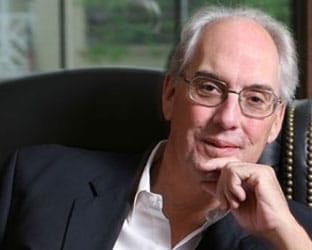
An Ongoing Adventure, Continuing Past Its Founder

0

In the Nordic language, “saga” means “an ongoing adventure.”


And, the story has it, this is one of the primary influences as to how Saga Communications, founded by the late Ed Christian, got its name.

“This is how I view my company and my life,” Christian said in a long-ago interview with a media outlet. “Our company is really an ongoing adventure.”

This is the story of how a 1986 acquisition set the stage for the creation of a company that today is publicly traded, is one of the few to have increased its dividend in the COVID-19 era, and continues to strive for success in mid- and small-sized markets across the U.S.


 

In late April 1986, the radio group Josephson Communications agreed to sell its six stations to what Radio & Records described as “an investor group comprised of nine-year Josephson Communications Broadcast President Ed Christian and top station/group management.”

That transaction, with funding from New England-based venture capital and banking firms, created Saga. The first stations — WKLH/Milwaukee; WNOR-AM & FM in Norfolk; WZKC/Rochester, N.Y.; and WVKO & WSNY/Columbus, Ohio. The Western New York station was immediately sold by Saga, but the company was poised for growth.

That was important to Christian; Josephson had decided to stop acquiring radio stations, and sell the division. Christian was determined to buy it. In the end, he struck a deal valued at $38.5 million — or $106.01 million in today’s dollars.

By the time Saga decided to go public in 1992, it was the owner of 15 radio stations in medium-sized U.S. markets. According to archived data, the company planned to sell 2.3 million share of Class A common stock to raise $27.6 million, with net proceeds to the company of $19.8 million. Christian would retain control of the company through his ownership of the company’s Class B stock, which had 10 times the voting rights of the Class A stock being offered.

Saga would go public at the end of 1992. Its track record over the last 29.5 years has been very good. By June 2002, shares would climb as high as $67.50, resuming growth seen prior to the “dot-bomb” and 9/11 economic slowdowns of 2001 and early 2002. By early 2009, Saga shares got caught up in the “Great Recession,” with values tumbling to the mid-$2 range. However, recovery was on the way. By the start of 2013, SGA was valued at $47.

Even with COVID-19, Saga shares have proven resilient. And, in an interesting twist, investors sent SGA soaring on August 22 as word of Christian’s death circulated across the financial and media worlds. At the Closing Bell, Saga was up 15.4% to $28.40 on exceptionally high volume.

Perhaps that’s a sign that Christian’s blueprint for success is strong, with his successor continuing what he set out to achieve as a broadcast media company leader and founder.

Saga’s success in 2022 also saw the increase of its quarterly dividend to $0.20, from $0.16, to shareholders of record on June 13. The dividend was paid July 1. Some broadcast media companies suspended their dividend as COVID-19 arrived in the U.S.; they have yet to resume dividend payments.

MITTEN MAN MAKES GOOD

Christian’s time in radio dates to his years as a Wayne State University student in the early 1960s. He worked at stations in Lansing and Flint, and after his 1966 graduation joined WCAR-AM & FM in Detroit as an account executive.

With a Master’s degree in hand from Central Michigan University, Christian, then aged 26, decided to buy WCER-AM & FM in Charlotte, Mich. In 1973, three years after the acquisition, he sold the properties to take an intriguing offer — the role of General Manager of WNIC-AM & FM in Detroit. Today a storied Adult Contemporary station, WNIC was in severe financial trouble and the stations had been repossessed. It was Christian who directed a format change to AC; Josephson purchased the stations for $4 million in 1976, putting him on course to start his saga as a broadcast media leader.

Ed Christian, January 1998

In August 1998, Christian participated in a Publisher’s Profile for Radio & Records with then-publisher Erica Farber, today the head of the Radio Advertising Bureau. Asked what his career highlight is, Christian replied, “Starting a company. I grew up in this business, and when I started, all I wanted to do is be on the air. I realized at a very tender age that I would always be a Triple A ballplayer and never be called up to the Majors. I just didn’t have the talent, and that’s always a harsh reality you have to deal with. So, I got into sales. I’m kind of in awe of what the industry has allowed me to do. And I still believe – even though it’s much harder with the barriers to entry – if you have desire, conviction, and commitment, you can succeed in this business. You’re only limited by your own negatives.”