A Group Forms To ‘Protect’ Local TV In The Streaming Era

0

Local broadcast stations that are members of the ABC, NBC, FOX and CBS Television Affiliate Associations, representing more than 600 local TV stations across the country, have launched an advocacy group with one mission in mind — to urge lawmakers and regulators “to act now to protect the future of local news in America.”


But, is this coalition simply seeking to “protect” local broadcast TV news? Upon closer examination, the true intent is clear: the coalition wants Washington to “modernize existing regulations” while ensuring the economic viability of local TV news remains healthy.

Translation: Broadcast TV wants Congressionally mandated streaming retransmission consent revenue.


 

Introducing the “The Coalition for Local News,” which says it is “dedicated to the belief that local news is essential to the well-being of local communities across the nation and is a vital pillar of American democracy.”

The group plays up research studies that show local TV is the most-trusted source of news for Americans, with locally produced broadcasts offering timely coverage of important issues and events, emergency weather service, and access to life-saving information.

But, what’s the real regulatory push behind this coalition?

The group points to a “streaming loophole” in Congressionally-mandated retransmission consent rules, which require MVPDs — but not online streaming services including virtual MVPDS (vMVPDs_ — to negotiate directly with local broadcasters for carriage of their stations.

With streaming services, according to the coalition, representing about one-third of the pay-TV market and growing, the message is far bigger than preserving local news. Rather, broadcast TV companies are calling on Congress to protect a key component of their quarterly revenue: retransmission consent fees.

With core advertising revenue trends shaky and political dollars injecting broadcast TV stations every other year, creating apples-to-orange comparisons set to play out in second-quarter 2023 earnings reports, many companies have turned to retransmission consent fees as a cushion, allowing them to pay dividends to investors while keeping losses at bay.

This, of course, has been vilified by such groups as the American Television Alliance (ATVA) and ACA Connects, which represent the broadcast cable TV industry. As they see it, greed — not fair compensation, despite increased investment in local news by numerous broadcast TV station owners — has fueled a rapid rise in retransmission consent revenue. If it were up to them, all of this growth would cease. In their perfect world, all retrans dollars would evaporate.

Of course, that’s not going to happen anytime soon. But, there’s a double-edged sword for broadcast TV. As “cord-cutting” imperils the MVPD business, fewer subscribers translates to lower retransmission consent revenue. And, projections show retrans collapsing within seven years as the MVPD provider fades in prominence.

Getting streamers to pay retrans fees, therefore, is a paramount goal for broadcast TV — hence the creation of a coalition “protecting” not only local news, but all programming delivered by a Big Four network affiliate.

Just how important is the continued flow of retransmission revenue to broadcast television? For Nexstar in Q1 2023, core advertising revenue climbed 4% to $428.1 million from $411.7 million. At the same time, the “Distribution” revenue, inclusive of retransmission fees for its broadcast TV stations and revenue tied to its cable TV assets including NewsNation and its stake in Food Network, rose to $667.9 million, from $621.2 million.

For Gray Television, retransmission consent dollars played a large part in its Q1 2023 revenue gain, as they rose 1% to $395 million. Core advertising declined by 2% in the quarter, to $357 million.

Even Scripps benefited greatly in Q1 2023 from retransmission dollars. Distribution revenue increased 2.4% to $163 million in the quarter; core advertising revenue decreased 10% to $141 million.

With these dollars integral to publicly traded broadcast TV companies, the Coalition for Local News paints the portrait that its locally owned stations “have lost control of their retransmission consent rights under current rules that cut them out of the negotiating process with streaming services.” And, the Coalition says, “Without the ability to negotiate directly with streaming services, local broadcasters cannot obtain the compensation necessary for them to sustain their substantial investments in local news.”

Given the core advertising trends and long-term forecast for retrans, that’s true — setting broadcast television up for an extreme challenge, given the expenses associated with the transition to ATSC 3.0-powered NEXTGEN TV, which continues to ramp up in an environment where everyday consumers still may not comprehend the difference between NEXTGEN TV-capable and 8k UHD receivers.

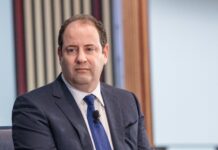
Mike Meara, President of NPG Broadcast, is a member of the coalition. As a former chair of the ABC Television Affiliates Association, he’s adamant that mandated retransmission payments from streamers be enacted by Congress.

Mike Meara
Mike Meara

“Local broadcast stations can thrive in a fair marketplace. We have demonstrated as much over the past 30 years of successful competition in the cable and satellite era,” he says. “But no business can succeed when the rules don’t apply fairly and reflect today’s reality. The market has evolved dramatically and it’s time for lawmakers and regulators to act to protect local broadcast news.”

A CALL ALREADY MADE IN CONGRESS

The Coalition for Local News already has an advocate in the U.S. Senate — Commerce Committee Majority Leader Maria Cantwell (D-Wash.).

On June 22, during its nominations hearing for FCC Commissioners, Cantwell made it clear that a proceeding started nine years ago regarding streaming media services and “bargaining in good faith” needs to be revived. As such, Cantwell sent a letter to Chairwoman Jessica Rosenworcel urging the FCC to refresh the record on vMVPDs and retransmission consent. This was greeted positively by NAB President/CEO Curtis LeGeyt.

Among the Coalition’s chief priorities is following Cantwell’s lead, by urging the FCC to refresh the record now with comments that reflect “the vastly changed market realities of 2023.”

In fact, the FCC last week announced its intent to consider updating a separate set of longstanding program carriage rules, something the Coalition for Local News calls “an acknowledgment of the need to modernize video regulations in light of a changing marketplace.”

“Congress and the FCC have always modernized federal rules in other contexts to keep them in line with advancements in communications technologies and changes in the marketplace. All we ask is that we modernize these regulations to reflect the current marketplace so local broadcasters are able to compete and thrive on a level playing field,” said Michael O’Brien, a SVP at The E.W. Scripps Company and a member of the Coalition. “This ‘streaming loophole’ takes direct investments away from local broadcasters and allows national media conglomerates to control the right to local broadcasters’ signals, ultimately deciding the fate of local news.”


A website, coalitionforlocalnews.org, has been created. The chairs of the “Big Four” network associations helped put the website together, with the support of an outside public relations firm.

According to a representative from this PR firm, a list of the broadcast television station groups that are members of the Coalition for Local News is not readily available. However, it was confirmed that every “Big Four” affiliate association member station is a member of the Coalition and that companies including Nexstar Media Group, TEGNA, Sinclair Inc., The E.W. Scripps Co. and Allen Media Group have stations that are affiliate group members.