
It’s a vote that may be scheduled for one of the coldest months of the year in Washington, D.C., but the end result would bring a long-awaited melting of ownership rules the FCC has had in place for radio and TV since the days before digital media and “Big Tech” swept in.
The December Open Meeting will include an Order that would “modernize” the Commission’s ownership limits, as part of the long-delayed 2022 Quadrennial review required by the Telecommunications Act of 1996.
Specifically, the FCC’s new proposal would treat its ownership limits as “baselines,” allowing the Commission, on a case-by-case basis, to approve deals exceeding the baselines — but only if doing so would promote the public interest.
Most notably, the Order would eliminate the subcaps that restrict the balance of AM and FM stations one entity can own in a local market. “By repealing these restrictions, the FCC would allow local broadcasters themselves to determine the right mix of AM and FM stations for their own markets,” the Commission said.
Such news could provide a life preserver of sorts to companies including Townsquare Media, iHeartMedia and Saga Communications, each of which have seen significant share erosion over the last several weeks.
For TV, the Order would retain the Dual Network Rule — prohibiting a merger of ABC with FOX, for instance, retaining competition among the “Big Four” English-language television networks.
While discussions of the vote were the subject of many rumors over the last two weeks, the FCC made the news official in a Monday afternoon announcement that the three vote-casting members of the Commission will decide at its December 17 meeting whether or not rule revisions should be made that would “empower broadcasters to compete, innovate, and better serve their communities by operating in the public interest.”
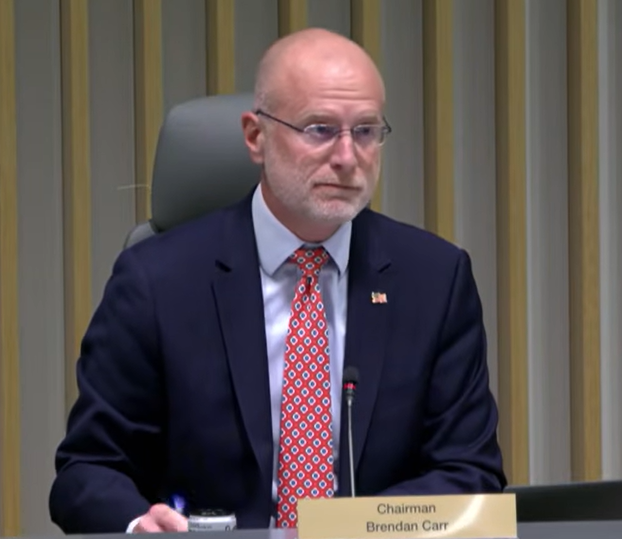
A “yes” viewpoint was shared by FCC Chairman Brendan Carr, and it is one that Republican Commissioner Olivia Trusty has largely sided with. As such, any dissent from the lone Democrat on the Commission, Anna M. Gómez, would have no bearing on a likely 2-1 vote — unless Gómez were to agree that it is time for broadcast radio and TV to see rule changes first suggested by former FCC Chairman Ajit Pai during the first term of President Trump.
As the Carr Commission sees it, local radio and TV broadcasting companies currently compete directly for audiences and advertising dollars with “massive online streaming, social media, and Big Tech platforms.” While that may be the case when it comes to ad dollars, these platforms do not create unique news or entertainment content of their own, for the most part. Nevertheless, the NAB and a host of broadcast licensees have argued — as does the FCC’s Republican majority — that radio and TV are hindered by media ownership rules adopted in the pre-Internet era.
“While these larger online platforms face no restrictions on their reach within local markets, current ownership rules limit the number of stations local broadcasters can own in the markets they operate in,” the Carr Commission. Thus, the FCC will vote next month on a proposal “to modify these outdated local ownership limits, leveling the playing field between broadcasters and the large media conglomerates.”
To some, the “large media conglomerates” are Nexstar Media Group, iHeartMedia, Cumulus Media and Sinclair. Allowing them to grow, to opponents of further deregulation, would lessen diversity of viewpoints and result in less voices in a local market. The NAB and many TV companies counter that further consolidation is beneficial, allowing a market to receive more televised news programming thanks to a stronger economic strategy.
For the GOP-led FCC, “These long-overdue updates will put local broadcasters in a far better position to attract investment, serve the public interest, and strengthen the community reporting Americans rely on.”
In prepared comments, Carr said, “For too long, the FCC’s broadcast ownership rules have been stuck in the past. Local radio and television stations are no longer just competing with the broadcast station down the street. They are competing with Big Tech companies and streamers that do not face the same market-by-market restrictions. Unless we modernize our regulations, those local broadcast stations will be unable to compete on a level playing field and many of them could go dark—leaving communities across the country without the live and local news that Americans depend on.”
He also contends, as does the NAB, that “if you care about the future of local journalism, then you should ensure that local broadcast stations do not go the way of local newspapers. The FCC has a chance to give local broadcast stations a fighting chance now and into the future.”
The plan for radio would be similar to that adopted for TV — The FCC would replace its “bright line approach” to local broadcast ownership “with a much more granular, case-by-case review.”
This process, says Carr, “will encourage good deals that enable broadcasters to serve the public interest, while ensuring that the agency blocks bad ones.”
As he sees it, the Commission is already seeing the benefits of this approach in markets where the FCC has granted “additional ownership flexibility” to local broadcasters. “Stations have responded by expanding local news, investing millions in facilities and infrastructure, strengthening emergency operations, restoring journalism resources, and creating jobs in communities that had seen years of decline,” Carr said.
Senior FCC officials discussed the proposal in a press conference held Monday afternoon (11/23). Speaking on background, a Commission representative responded to a query from Radio + Television Business Report regarding the timing of the vote. With Congress poised to shift to Democratic control in late January, some may view the December vote as an attempt by Republicans to push through a rule change that could be contested in court or could have come under scrutiny by a new Congress.
Not so, says the FCC, noting that they’ve been spending a long time as part of the “natural timeline” and completion of the 2022 Quadrennial review. “There was no strategic timing consideration,” the official said, suggesting the December Open Meeting vote is simply the result of months of work and not to ensure safe passage of the proposal.
The draft Order will be made available on Tuesday via FCC.gov.
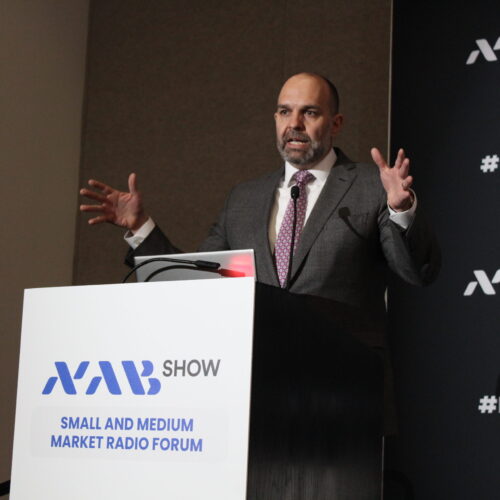 In response to the FCC’s announcement, NAB President/CEO Curtis LeGeyt said, “We commend Chairman Carr on today’s announcement that the FCC will vote on an item to modernize its local broadcast ownership rules at the upcoming open meeting. Updating these outdated restrictions is critical to ensuring local radio and television stations can better compete with streaming and tech giants in today’s media marketplace and continue investing in the local content their communities depend on. We look forward to reviewing the item and working with the Commission to advance meaningful reforms that strengthen local stations and their ability to serve their communities.”
With Connoisseur Media seeking FCC approval to own every commercially licensed radio station in Lincoln, Neb., the Commission has approved waivers on three other transactions that put certain radio station licensees over the subcaps.
In August 2025, the FCC Media Bureau approved a waiver letting Connoisseur take five Alpha Media FMs in Tyler-Longview, TX, one over the market’s FM subcap. Connoisseur received another waiver to close its $10 million purchase of Bonneville International’s San Francisco cluster, completed in May, after arguing its revenue share would still trail Audacy and iHeartMedia.
Last week, the Bureau cleared Draper Media’s acquisition of Forever Media stations on the Delmarva Peninsula, giving Draper nine stations in Salisbury-Ocean City, MD, two over the cap and four over the FM subcap, and rejected a petition to deny the deal.
— Additional reporting by Cameron Coats