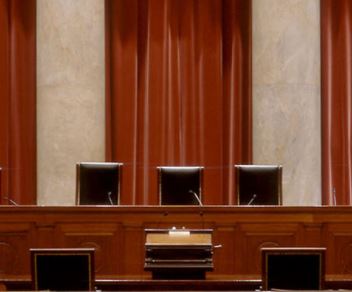
With no commentary or publicly released explanation, the Supreme Court of the United States on Monday (10/5) denied the request of Nexstar Media Group to review a Second Circuit ruling that reversed an antitrust win — one that is wholly tied to the thorny issue of retransmission consent negotiations.
It’s a win for a team of King & Spalding attorneys representing DirecTV, which in late August filed a brief in opposition of Nexstar’s April 28 petition for a writ of certiorari. This arrived after the court granted DirecTV’s legal counsel an extra four weeks to prepare its response.
King & Spalding’s Paul Alessio Mezzina is likely thrilled. He and his colleagues argued to the nation’s highest judicial body that “it takes chutzpah” for Nexstar and shared service providers White Knight Broadcasting and Mission Broadcasting to claim that it is “speculative” whether blacking out the most popular television stations for DirecTV’s subscribers harms DirecTV.
With the Supreme Court opting not to consider a relook at the Second Circuit decision, DirecTV’s argument that the broadcasters’ “entire business model depends on MVPDs being injured by blackouts” now holds more weight. As Mezzina and his team argued, “MVPDs would have no reason to pay [Nexstar, White Knight and Mission] for retransmission rights in the first place, and Petitioners would have zero negotiation leverage, if failing to enter into such agreements did not negatively impact MVPDs.”
In its 40-page document dated April 28 submitted to the U.S. Supreme Court on May 4 for its consideration, counsel for Nexstar Media Group at Covington & Burling and lawyers at Wiley Law representing Mission Broadcasting argued that antitrust litigants would benefit greatly from the court’s guidance on the antitrust standing doctrine in the 1983 decision in Associated Gen. Contractors of Cal., Inc., v. Cal State Council of Carpenters.
The key question, as the attorneys for Nexstar, White Knight and Mission see it: Are private plaintiffs entitled to bring per se price-fixing conspiracy claims for a purchase they never made?
With the Supreme Court declining to provide its own answer to that question, the Second Circuit interpretation is now the standard for Nexstar, its shared services partners and DirecTV.
The matter is tied to a 2023 allegation by DirecTV that Nexstar colluded with its shared serves partners on price-fixing of retransmission consent fees.
FROM THE RBR+TVBR ARCHIVES: