

GatesAir has added a series of new monitoring, reporting and network architecture enhancements to its AirWatch365 managed service.
This sees GatesAir now gathering operational data from 18 TV and FM radio transmitter sites.
Available globally for TV, FM and DAB/DAB+ radio transmission systems, AirWatch365 provides continuous transmitter monitoring and diagnostic support through GatesAir’s 24/7 Network Operations Center (NOC). The managed service combines centralized monitoring, analytics and GatesAir RF expertise.
GatesAir introduced its AirWatch365 Edge Gateway at NAB Show 2026 as an on-premises appliance for gathering and normalizing operational data from transmitters and associated infrastructure. Since then, GatesAir has expanded the underlying monitoring architecture to accommodate different customer IT and network security requirements.
“We have learned a tremendous amount from putting AirWatch365 to work across live broadcast facilities, and much of the progress we have made since NAB comes directly from listening to our customers,” said Brent Whelan, Vice President of Global Services, GatesAir. “We now have nearly 20 sites providing real transmitter data to help us strengthen the service, while giving customers more flexibility in how AirWatch365 interfaces with their networks. We also encourage broadcasters planning their 2027 investments to consider how AirWatch365 can fit into their capital planning, particularly as they look for ways to protect and extend the value of their transmission infrastructure.”
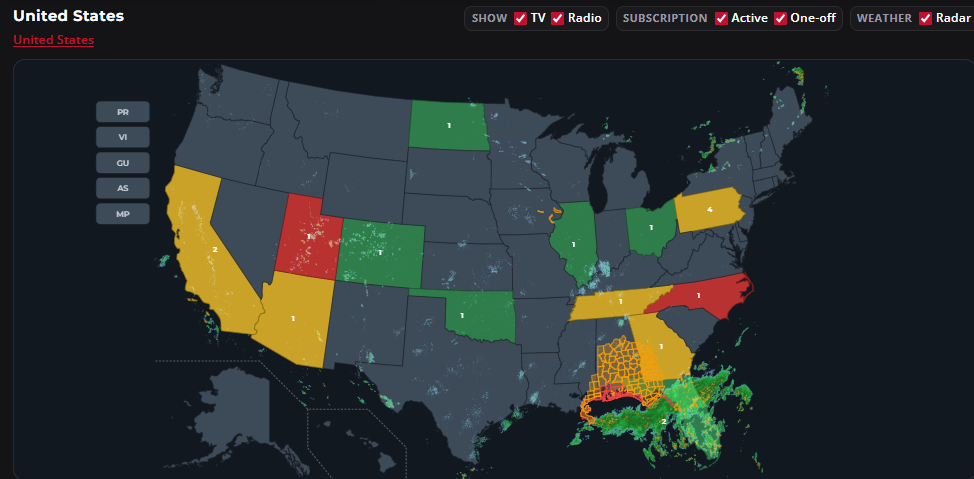
New developments include an AirWatch365 fleet performance dashboard that gives GatesAir specialists a centralized view of transmitter health and performance across monitored sites. The dashboard provides nationwide, regional and individual site views. GatesAir is also developing read-only customer access to the dashboard, an enhancement that emerged directly from beta customer feedback. The planned customer view will provide the same operational views relevant to their own stations and networks, with graphical representations of transmitter systems and detailed performance information covering parameters such as forward and reflected power, temperatures, system efficiency and alarm history.
 New reporting tools can quickly generate transmitter health reports using the accumulated operational data. These reports will support AirWatch365 incident response as well as quarterly performance summaries, providing broadcasters with both immediate diagnostic intelligence and a longer-term view of transmitter health.
GatesAir has also added a weather overlay to the fleet dashboard, another enhancement requested during beta testing. The feature allows GatesAir specialists to visualize weather patterns in relation to transmitter locations, providing additional context when investigating incidents and helping teams associate transmitter events with severe weather or changing environmental conditions.
The expanding beta program has also helped GatesAir refine how AirWatch365 connects with customer networks. Recognizing that security policies vary between broadcasters, GatesAir has developed architectural options that allow AirWatch365 to operate within or outside the customer firewall based on IT requirements.
For customers that permit AirWatch365 inside the firewall, transmitter data and log files can flow automatically into the monitoring environment without manual intervention. GatesAir has also developed an architecture for customers that require the AirWatch365 Edge Gateway to remain outside the protected network. In these configurations, transmitter telemetry can be securely relayed from within the customer network to the Edge Gateway without providing GatesAir direct access to the transmitter or internal network.
Real-world testing has additionally allowed GatesAir to validate the bandwidth requirements for AirWatch365. The service requires very little data throughput, opening monitoring possibilities for remote transmitter and translator sites with limited connectivity. In some cases, basic cellular connectivity can provide sufficient bandwidth for AirWatch365 data collection. These options build on the secure Edge Gateway architecture introduced at NAB, which provides the local data acquisition layer between broadcast infrastructure and the AirWatch365 managed service.
The growing volume of real-world transmitter information is also strengthening AirWatch365’s analytics capabilities. GatesAir is applying AI-assisted analysis to transmitter alarms and operational data to help its service team interpret events and identify potential root causes more efficiently. The technology can translate complex, engineering-oriented alarm information into more accessible diagnostic guidance while considering related transmitter parameters and historical information. GatesAir is continually refining these capabilities using real-time information collected from participating sites, supplementing previous service histories with current operational data from live transmission systems.
This approach reduces the manual processes traditionally required to diagnose more complex transmitter events. Rather than first arranging remote access, retrieving log files and escalating them to engineering resources for interpretation, AirWatch365 gives GatesAir service specialists immediate access to the information required to assess an incident.
“The real value of AirWatch365 is what happens when continuous monitoring, historical data and RF expertise all come together,” said Whelan. “Instead of waiting for a transmitter problem to become obvious and then beginning the diagnostic process, we are building an environment that gives our team visibility into what is happening now, what happened leading up to an event, and what the data may be telling us about the underlying cause. That gives broadcasters another layer of intelligence and expertise protecting their most mission-critical infrastructure.”